Decoding Mint Marks: Rare U.S. Coin Mint Marks and Their Stories
If you’ve ever examined a coin closely, you may have noticed a tiny letter beside the date. That small stamp—the mint mark—reveals where a coin was made. While easy to overlook, mint marks hold powerful clues about a coin’s origin, scarcity and value. Understanding mint marks can transform pocket change into treasures and open up stories of frontier mints, wartime shortages and collector rarities.
What is a mint mark?
A mint mark is a single letter stamped onto a coin to indicate the U.S. Mint facility that produced it. Mint marks help identify coins from different locations and play a key role in determining rarity and desirability. The most common U.S. mint marks are:
-
P – Philadelphia Mint. This mint produced the nation’s earliest coins and was long the only facility. It began adding a “P” to coins regularly in 1979.
-
D – Denver Mint. Denver opened in 1906 and today is one of the main producers of circulating coinage.
-
S – San Francisco Mint. Established during the California Gold Rush in 1854, it struck large numbers of gold and silver coins.
-
W – West Point Mint. Used primarily on bullion and commemorative coins.
-
CC – Carson City Mint. Operating from 1870 to 1893, this Nevada mint produced coins from Comstock Lode silver and left behind some of the most sought‑after pieces.
-
O – New Orleans Mint. Opened in 1838 to meet Southern demand, it closed in 1909 after producing significant quantities of silver coins.
Other historic marks include C for Charlotte and D for Dahlonega, both gold‑coin mints in the 19th century .
A brief history of mint marks
Mint marks were first used on U.S. gold coins in 1838 when branch mints opened to handle regional mineral discoveries. Before then, the Philadelphia Mint produced all coinage and didn’t use a mint mark. As the country expanded, new mints were established to serve regional commerce.
-
Charlotte (C) and Dahlonega (D) mints began operation in 1838 to convert Southern gold into coinage.
-
New Orleans (O) opened the same year to supply coins to the Mississippi Valley, but closed during the Civil War and later reopened until 1909.
-
San Francisco (S) was established in 1854 following the California Gold Rush.
-
Carson City (CC) minted coins from 1870 to 1893 using silver from the Comstock Lode.
-
Denver (D) began striking coins in 1906 after Colorado’s silver boom.
During World War II, “war nickels” (1942‑45) featured large mint marks above Monticello to signify higher silver content . In the mid‑1960s, mint marks were removed from all U.S. coins to discourage hoarding during a coin shortage . They returned in 1968, to collectors’ relief .
Why mint marks matter
Mint marks are more than letters; they often determine a coin’s rarity and value. Branch mints had varying production levels. Philadelphia, the primary mint, struck the majority of coins . San Francisco and Denver issued large numbers, while Carson City’s output was small and sporadic . These differences influence scarcity:
-
Carson City (CC) – The Carson City Mint processed silver from the Comstock Lode but operated only intermittently between 1870 and 1893 . It produced roughly 56.6 million coins in total. Production pauses and a short operational period make CC‑marked coins rare. Collectors prize Morgan Dollars with a CC mark, especially dates like the 1873‑CC Dime Without Arrows and the 1870‑CC Double Eagle.
-
New Orleans (O) – The New Orleans Mint struck coins from 1838 until 1861 and again from 1879 to 1909. Although it produced large quantities of silver dollars, certain dates such as the 1879‑O Morgan Dollar have low surviving populations .
-
Denver (D) vs. Dahlonega (D) – Both use the letter “D,” but Dahlonega operated only from 1838 to 1861, while Denver started in 1906. Because Dahlonega’s run was short, coins bearing its “D” mint mark (mostly gold pieces) are far rarer.
Famous coins where the mint mark makes the difference
Some coins illustrate how a single letter can change a coin from ordinary to extraordinary:
-
1909‑S VDB Lincoln Cent – Only 484,000 cents were struck at the San Francisco Mint before the designer’s initials were removed. That tiny “S” mint mark turns a common cent into a prized rarity.
-
1893‑CC Morgan Silver Dollar – Low mintage and Carson City’s closure make this coin highly sought after.
-
1916‑D Mercury Dime – While Philadelphia struck more than 20 million dimes and San Francisco over 10 million, the Denver Mint produced only 264,000 pieces. As a result, the 1916‑D is scarce and valuable.
-
1932‑D and 1932‑S Washington Quarters – In 1932 most quarters were minted in Philadelphia, but the Denver and San Francisco mints struck far fewer pieces, making these mint‑marked coins the rarest in the series.
Mint marks also help pinpoint minting errors or varieties, such as repunched mint marks (RPMs) or overdates. For example, some 1942 nickels show a doubled mint mark—an intriguing error to collectors.
Where to find the mint mark on your coins
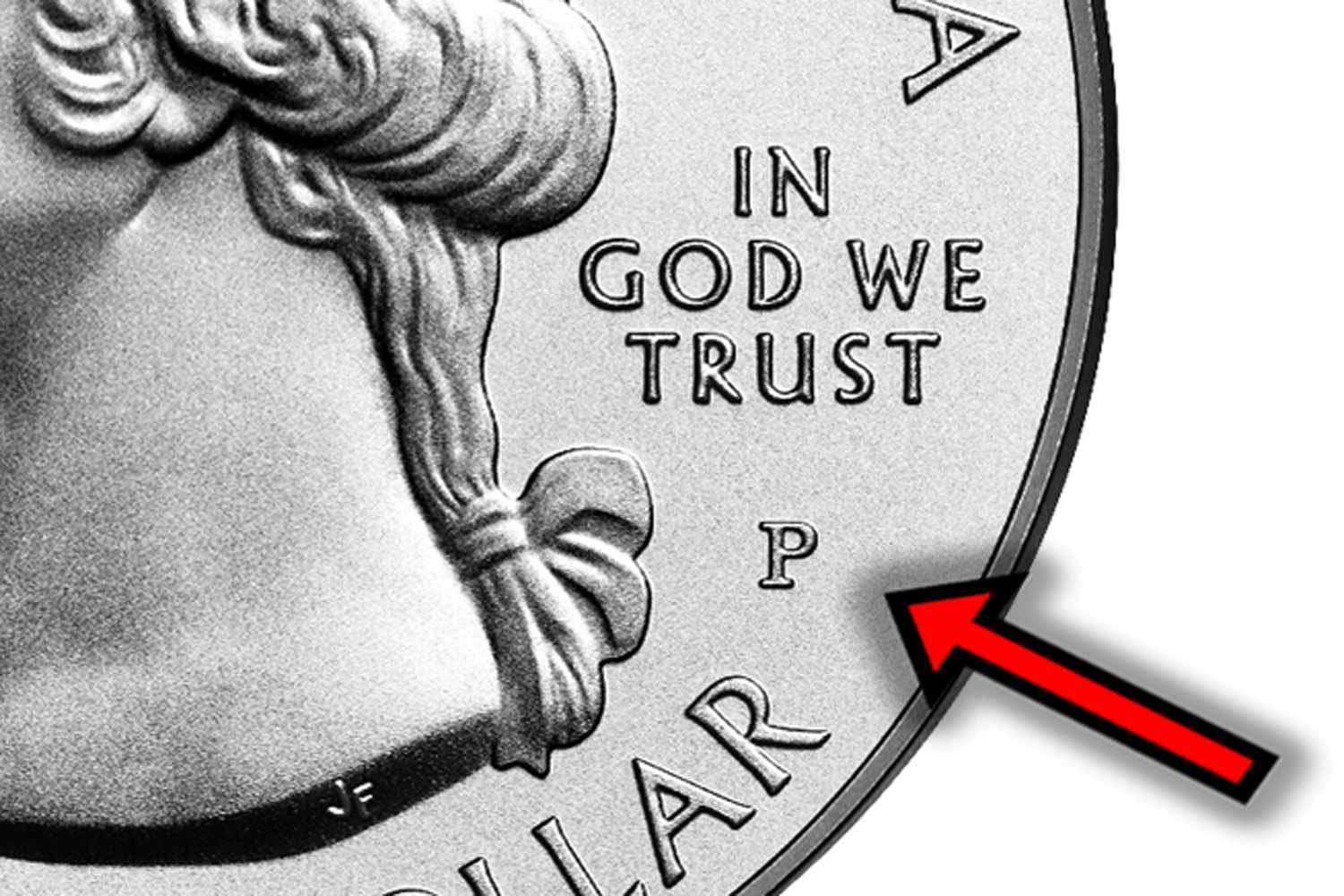
The location of the mint mark varies by series. On Lincoln Cents, it appears below the date; on Jefferson Nickels, it’s to the right of Jefferson’s bust or above Monticello on “war nickels”; on Washington Quarters, it’s to the right of Washington’s ponytail . On Morgan and Peace Dollars, the mint mark sits on the reverse beneath the wreath , while collector versions of American Silver Eagles have the mark on the reverse. Knowing where to look is the first step in identifying a coin’s story.
Mint marks beyond the United States
While this article focuses on U.S. coins, mint marks have ancient roots. Greek and Roman mints used symbols to indicate where coins were struck . European nations continued the practice, and many modern world coins carry mint marks. Collectors interested in international coinage can apply the same principles: learn the mint marks, understand mintage figures and identify scarce issues.
Why mint marks captivate collectors
Mint marks bring context to metal. They connect a coin to a place—Charlotte’s gold mines, Carson City’s silver boom, Denver’s frontier—and to events like the Civil War or World War II. Rare mint marks capture the economic and political history of their era, transforming small letters into compelling stories. When collectors discover an unexpected mint mark in circulation or in a family heirloom, they feel the thrill of uncovering a hidden narrative.
Mint marks also underscore the importance of research. Without understanding these letters, one might overlook a key date such as the 1916‑D Mercury Dime or assume that all Morgan Dollars are equal. By learning to decode mint marks, you unlock new dimensions of value and enjoyment in your collection.