Selling an Inherited Rolex: How Resale Value Is Actually Determined
You opened a drawer, or a safe, or an estate box, and there it was. A Rolex. Maybe it was your father’s everyday watch for thirty years. Maybe it belonged to a grandparent you barely knew. Either way, you’re now holding something that might be worth a few thousand dollars — or, in the right circumstances, a great deal more.
The Rolex resale market is unlike almost any other consumer product. A used Rolex can be worth more than a new one, depending on the model. A scratched-up vintage piece can be worth more than a polished, near-mint example of the same reference. And the same watch, sold two different ways, can fetch dramatically different prices.
Here’s what actually drives the number — and what to know before you sell.
Start with what you have: model and reference number
Every Rolex has a reference number that identifies the exact model variant. It’s usually a 4-, 5-, or 6-digit number found between the lugs at the 12 o’clock position when you remove the bracelet (or visible on the warranty papers if you have them).
The reference matters more than the model name. A “Submariner” can mean dozens of different watches depending on the reference. A 1680 Submariner from the 1970s is a different watch — and a different value — than a 16610 from the 1990s or a 124060 from today.
Some references that historically command strong resale value:
- Submariner references 5513, 1680, 16800, 168000, 14060, 16610, 14060M, 124060, 116610
- GMT-Master and GMT-Master II references 1675, 16750, 16710, 16713, 116710, 126710
- Daytona references 6239, 6263, 6265, 16520, 116520, 116500LN (the steel Daytona is famously hard to buy new and trades strong on the secondary market)
- Explorer and Explorer II references 1016, 1655, 16550, 16570, 214270, 226570
- Datejust in many references, with steel and two-tone pieces being the most common
- Day-Date (President) in solid gold and platinum
Reference identification is the foundation of any honest valuation. A buyer who doesn’t ask for the reference, or who quotes you a number based only on the model name, isn’t really evaluating the watch.
The five factors that actually drive resale value
1. Condition of the case and bracelet
Original factory finishing — the alternating polished and brushed surfaces Rolex uses on most models — is part of what makes the watch desirable. Polishing destroys this. A case that’s been buffed by a non-Rolex jeweler loses the crisp transitions between case sides, the sharp lug edges, and the original geometry. Collectors and dealers can spot it immediately, and the value drop is significant — sometimes 20–40% on vintage models.
If your inherited Rolex looks “shiny like new” but is actually 40 years old, it has likely been polished, possibly multiple times. This isn’t a tragedy — the watch still has value — but it does affect the offer.
2. Originality of the dial, hands, and bezel
Rolex is famous for its service program, and over a long ownership period, watches often get service dial replacements — Rolex replaces the original dial with a new one during routine service. This destroys value on vintage pieces.
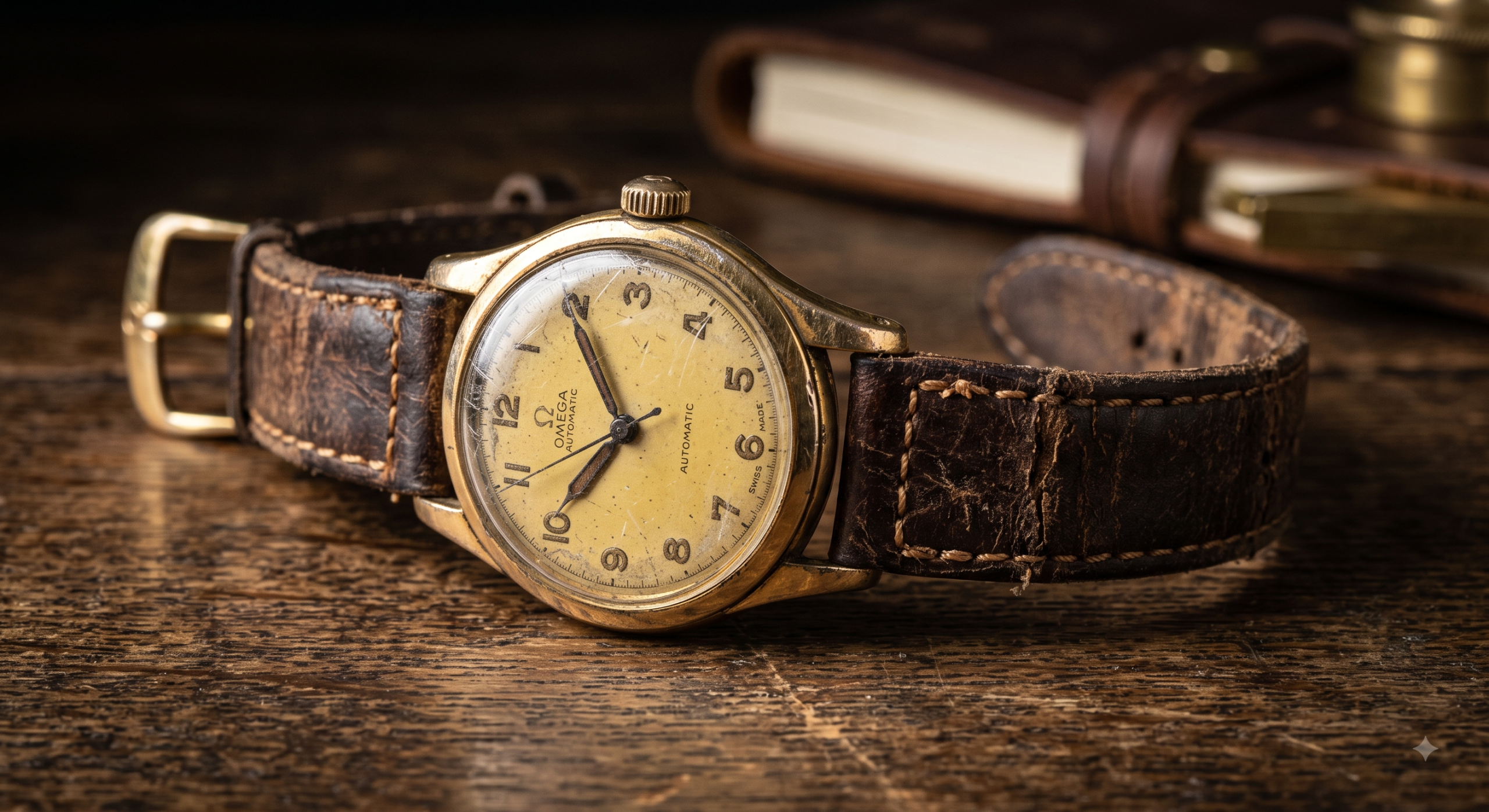
A 1970s Submariner with its original tritium-aged dial (often turning creamy or brownish over time — collectors call this “patina”) can be worth dramatically more than the same reference with a fresh service dial. The aged original dial is often the single most valuable component on a vintage Rolex.
Same logic applies to hands and bezel inserts. Original tritium hands matching the dial’s aging, and original bezel inserts with the correct font and color fade, all add value. Replacement parts subtract.
3. Movement and service history
Inside the case is a Rolex movement — but is it the correct Rolex movement for the reference, and is it intact? Watches that have had movements swapped, replacement parts installed during unauthorized service, or aftermarket modifications are worth substantially less.
Recent service records from Rolex itself (not from a third-party watchmaker) can add value, especially on watches that haven’t run recently. Service records from independent watchmakers can sometimes hurt value, particularly if non-original parts were installed.
4. Box, papers, and provenance
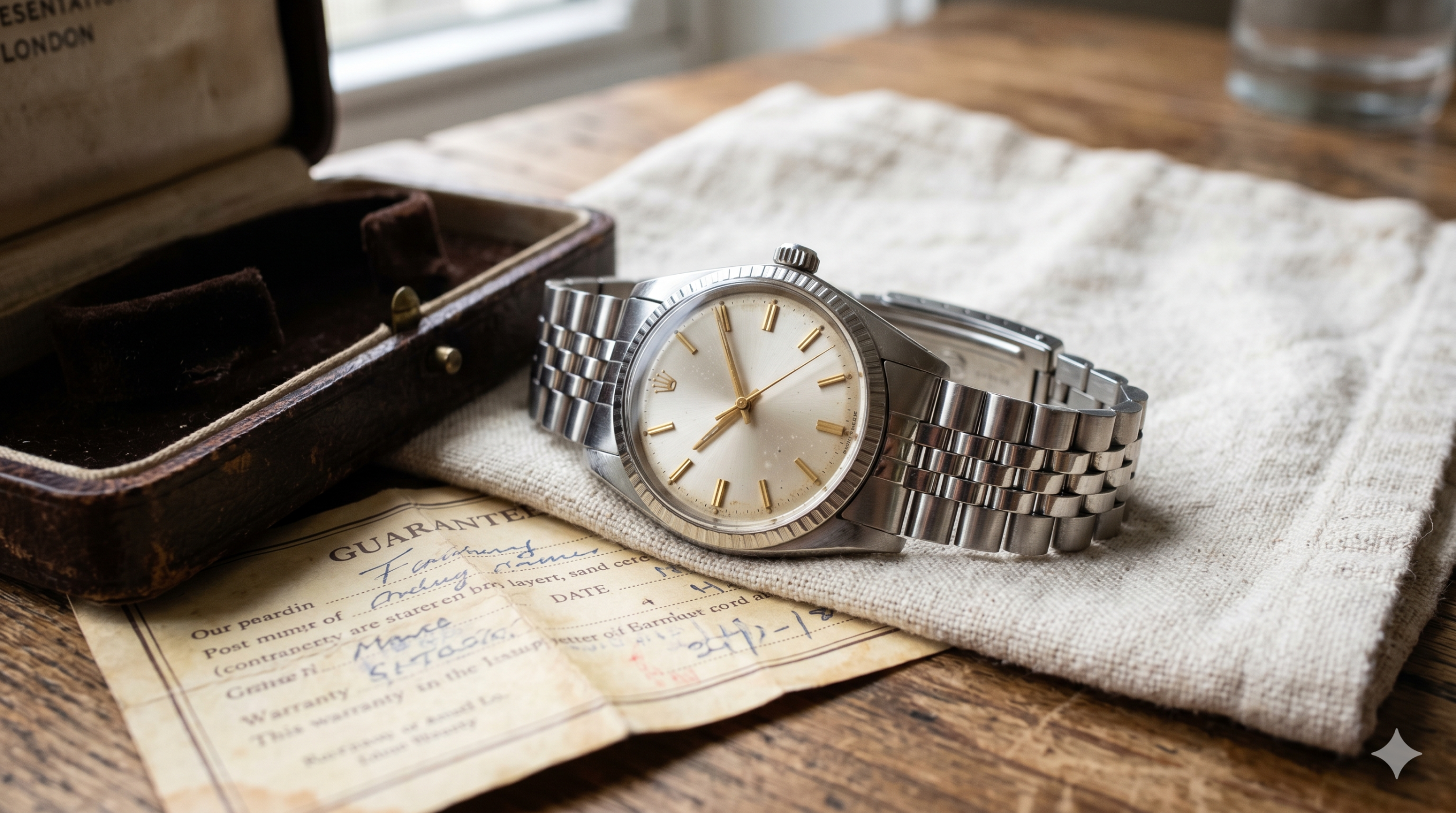
A Rolex with its original box, warranty card (or paper warranty for older pieces), instruction booklets, hang tags, and any service receipts is called “full set” — and full set examples sell for meaningful premiums over watch-only pieces. The premium varies by model but can easily be 10–30%.
If you have any paperwork at all that came with the watch — even a single original receipt or warranty — keep it. Don’t throw away the box. Don’t toss the booklets. These add real value.
Provenance also matters. If the watch can be tied to its original owner — say, a relative who bought it new and kept records — that documentation supports authenticity and value.
5. Market demand for the specific reference
Not all Rolexes are equally desirable on the secondary market. Sport models (Submariner, GMT-Master, Daytona, Explorer) generally command stronger demand than dress models (Datejust, Day-Date in standard configurations). Steel models often outpace gold models on a percentage basis. Certain “tropical” dials (where original black has faded to brown) can command big premiums on the right references.
Demand also shifts over time. A model that wasn’t particularly hot ten years ago might be sought-after today, and vice versa. A good buyer knows where the market is right now — not where it was when they first started buying.
Common mistakes that cost sellers money
Mistake: Polishing the watch before selling. Don’t take it to a jeweler to “clean it up.” Whatever shine they add subtracts directly from your offer.
Mistake: Servicing the watch through a non-authorized watchmaker. A recent service from an unknown source can hurt more than help. If the watch isn’t running, leave it as-is and let the buyer make their own service decisions.
Mistake: Throwing away boxes and papers. Even crumpled receipts, water-stained warranty cards, and beat-up boxes add value. Bring all of it.
Mistake: Selling to the first place that asks. Pawn shops, mall jewelry stores, and general “we buy gold” operations are often not equipped to properly evaluate vintage Rolex. A piece that’s worth $8,000 to a knowledgeable buyer might get a $2,000 offer from a store that treats it like a generic used watch. Always get at least one second opinion on a Rolex valuation.
Mistake: Trusting the internet “value lookup” tools. Online price aggregators show retail asking prices, not realistic sale prices. The number you see on a watch listing is what someone is hoping to get — not what’s been paid. Real values come from buyers who actually transact, not from listing prices.
Where to sell
A few realistic options for inherited Rolex pieces:
- Specialist watch dealers and buyers who deal in Rolex daily. They know the market, they know the references, and they can recognize originality. Offers reflect wholesale value but tend to be highest for genuinely desirable pieces.
- Auction houses for high-end vintage pieces (Daytona, Submariner Big Crown, early GMT, etc.). Strong results possible but you pay seller commission, and you wait weeks to months for the sale.
- Reputable buying events that include knowledgeable watch evaluators. Good for everyday Rolex pieces (modern Datejusts, common Submariners) where same-day payment is more attractive than maximizing the last possible dollar.
Avoid: pawn shops for anything you suspect is over a few thousand in value; general “we buy gold” operations without watch expertise; and online buyers who quote you a number sight-unseen and pressure you to ship the watch.
Coming to a Premier event
Premier Gold, Silver & Coin evaluates Rolex pieces at weekly buying events across the Midwest and Mid-Atlantic. Bring the watch, any paperwork or boxes you have, and we’ll walk you through the reference, the originality, and the offer. No obligation to sell, transparent calculation, and payment by business check the same day. Find a buying event near you or sign up for local notifications.
It’s a watch with a story — and possibly a significant value attached to that story. Take the time to understand both before you let it go.