Spring Cleaning Your Jewelry Box: Which Pieces Are Actually Worth Selling?
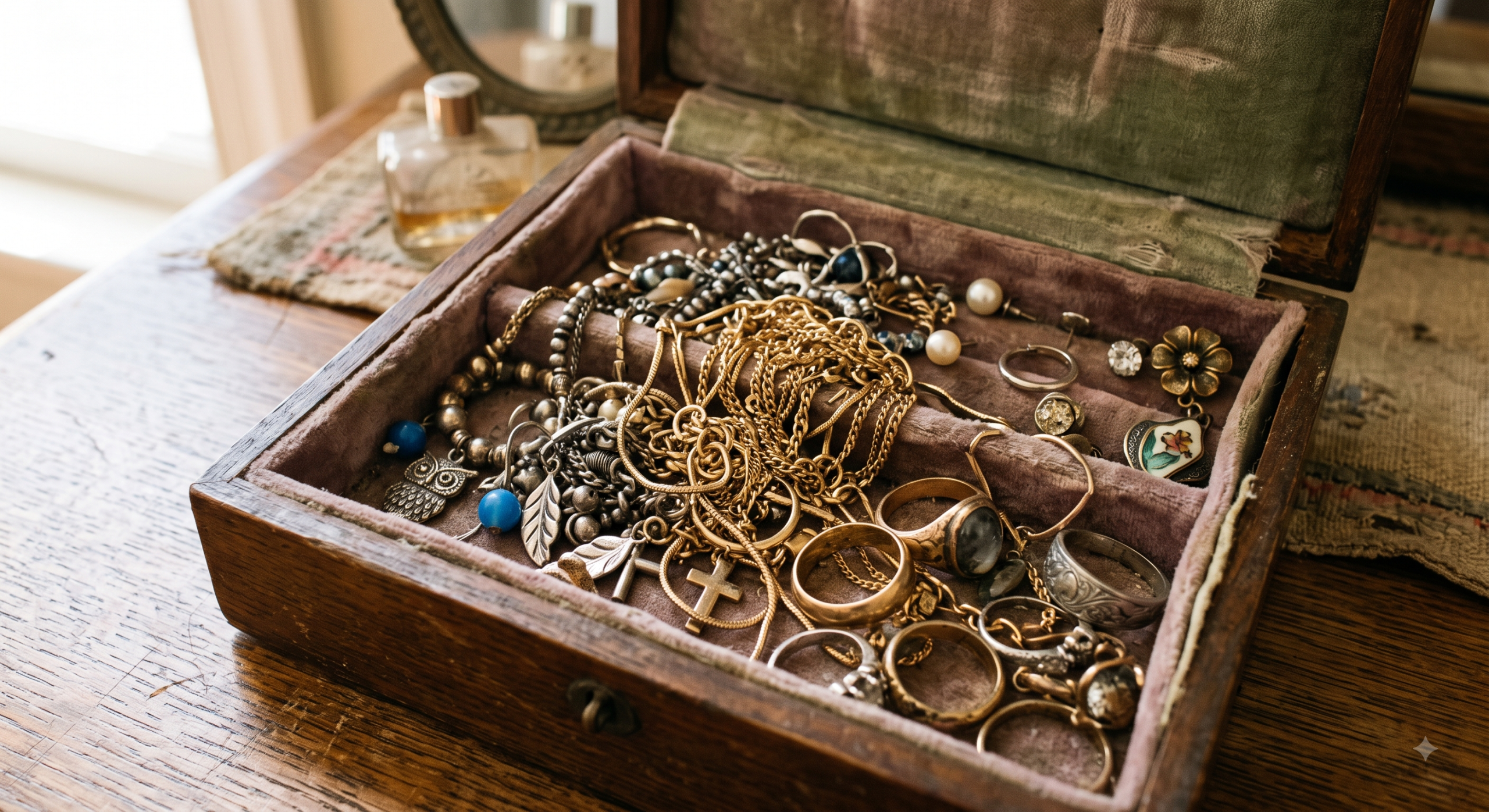
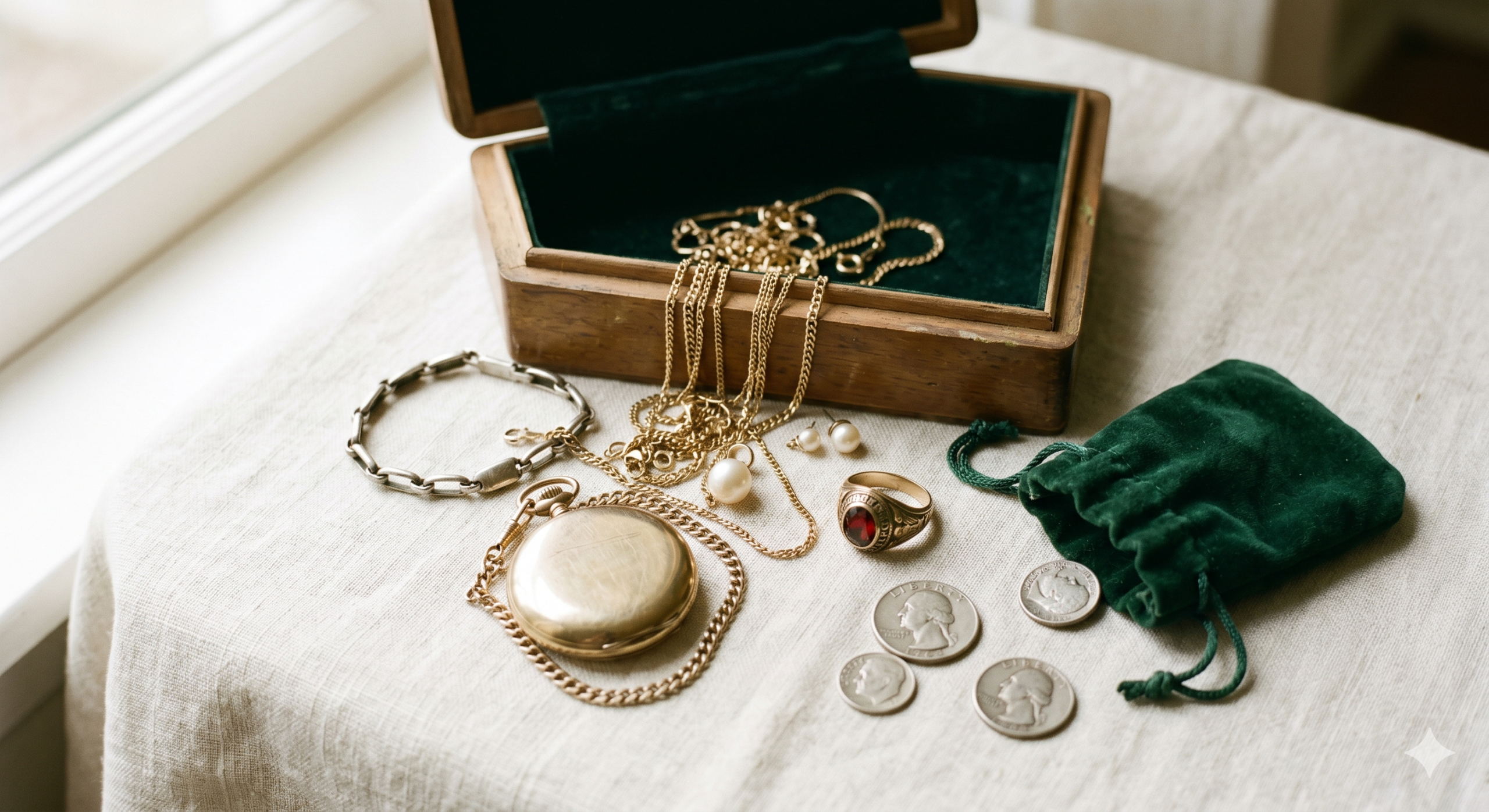
Before you sell gold jewelry — or anything else gathering dust in that drawer — pull it all out and take a real look. Everyone has the drawer. The one with the tangled chains, the single earring whose match was lost years ago, the class ring from a school you barely remember, a watch that stopped running years ago, and a velvet pouch from your grandmother that you’ve never opened because it feels disrespectful to throw it out. Almost everyone underestimates what’s in there.
The most common mistake people make is assuming that because something is broken, outdated, or unworn, it isn’t worth anything.
That’s not how this works.
The Mindset Shift Before You Sell Gold Jewelry
A gold chain doesn’t care that it’s tangled. A sterling silver bracelet doesn’t lose value because the clasp is broken. A mechanical watch from 1962 is often worth more not running than a brand-new department-store quartz piece is worth running.
Precious metal is priced by weight and purity, full stop. Condition matters for collectibles and designer pieces, but the underlying metal value is independent of whether the chain is kinked or the ring is bent.
This is the single most important thing to understand before you sell gold jewelry: don’t pre-judge what’s valuable based on how it looks.
What’s Actually Worth Selling When You Sell Gold Jewelry and Other Pieces
Pull everything out of the drawer. Here’s what’s worth a closer look:
Gold — any karat, any condition. Look for stamps like 10k, 14k, 18k, 22k, 24k, or the European equivalents (417, 585, 750, 916, 999). Broken chains, single earrings, bent rings, dental gold, gold-filled vintage pieces — all of it has value. Even the gold from a class ring or a worn-out wedding band gets weighed and paid.
Sterling silver. Stamped “.925,” “sterling,” or “STER.” This includes flatware, tea sets, picture frames, baby cups, jewelry, and the random ashtray your aunt left you. Sterling has been overlooked for years, which means most people have more of it than they realize.
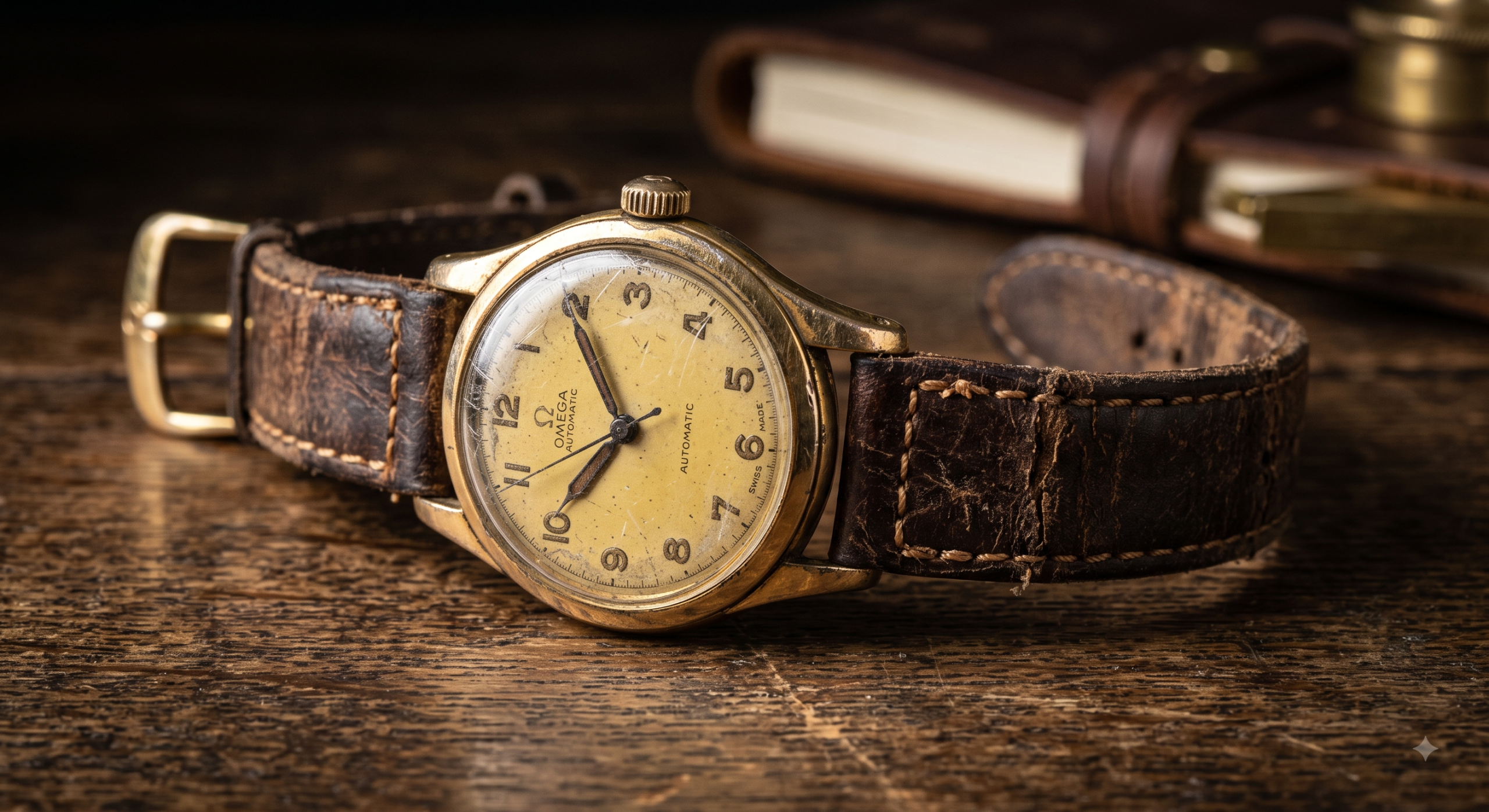
Watches — running or not. Vintage mechanical watches (Rolex, Omega, Longines, Hamilton, Bulova, Elgin, Waltham) hold value whether they tick or not. Pocket watches especially. Don’t try to fix it first — that often hurts the value.
Coins and bullion. Silver coins dated 1964 or earlier are 90% silver regardless of condition. Half dollars from 1965–1970 are 40% silver. Gold coins, junk silver bags, commemorative pieces, foreign gold — all of it.
Designer and signed costume jewelry. Not all costume is worthless. Pieces signed Trifari, Miriam Haskell, Eisenberg, Schreiner, Coro, Weiss, or Hobé can be worth real money on the collector market. Look for signatures on the back.
Loose stones, old engagement rings, estate pieces. Old European-cut and old mine-cut diamonds in particular are having a moment. Don’t assume an outdated setting means the stone isn’t valuable.
What Usually Isn’t Worth Much
Being honest about this matters:
- Gold-plated, gold-filled (lower karat), or “gold tone” pieces have minimal scrap value
- Modern unsigned costume jewelry from chain stores
- Cubic zirconia and most lab-created stones
- Stainless steel watches without a recognizable brand
- Silver-plated flatware (the base is usually nickel or copper)
A reputable buyer will tell you this up front rather than lump it in with the real material to pad a number.
Four Rules Before You Sell Gold Jewelry or Anything Else
Don’t clean anything. Polishing silver removes patina that collectors pay for. Cleaning a vintage watch can destroy its value. Buff out a scratch on a ring and you’ve lost weight. Leave it alone.
Don’t repair anything. A broken clasp is fine. A “restored” piece is often worth less than the original would have been.
Don’t break up sets. Matching earrings, a watch with its original box and papers, a tea set with all its pieces — these are worth more together than apart.
Keep the paperwork. Original boxes, receipts, certificates, old documentation from decades back, even a handwritten note about where a piece came from — all of it can add value, especially on watches and signed jewelry.
What to Do Next
If you’ve decided to sell gold jewelry and other pieces you no longer wear, the easiest move is to bring it all to someone who looks at this material every day. A buyer who handles thousands of pieces a week will spot value in things you’d have thrown out — and tell you honestly when something isn’t worth much.
Premier Gold, Silver & Coin runs weekly buying events at hotels across more than a dozen states. Evaluations are free, there’s no obligation to sell, and if you do sell, you’re paid by business check the same day.
Bring the whole drawer. You’ll be surprised what’s in there.