1909 VDB Lincoln Cent: Origin, Controversy and Collectible Legacy
The 1909 VDB Lincoln cent sits at the crossroads of American history, artistry and numismatics. It was the first everyday U.S. coin to depict an actual person and was intended to commemorate the 100th anniversary of Abraham Lincoln’s birth. Yet within days of its release, the coin was withdrawn from production because of an unexpected public uproar over three tiny initials on its reverse. Today, the 1909 VDB—particularly the scarce San Francisco issue—is coveted by collectors and investors alike. This article explores the coin’s origins, the controversy surrounding designer Victor David Brenner’s initials, and why the 1909 VDB Lincoln cent remains such a prized treasure.
A new centennial coin for a new century
In the early 1900s, President Theodore Roosevelt was determined to revitalize America’s coinage, which he considered uninspiring. Having admired a bas‑relief portrait of Abraham Lincoln by Lithuanian‑born sculptor Victor David Brenner, Roosevelt commissioned Brenner to design a new one‑cent coin to honor the 16th president. The cent was timed for release in 1909 to mark the centennial of Lincoln’s birth. This coin would replace the Indian Head cent and break with the tradition of featuring allegorical figures by depicting a real person.
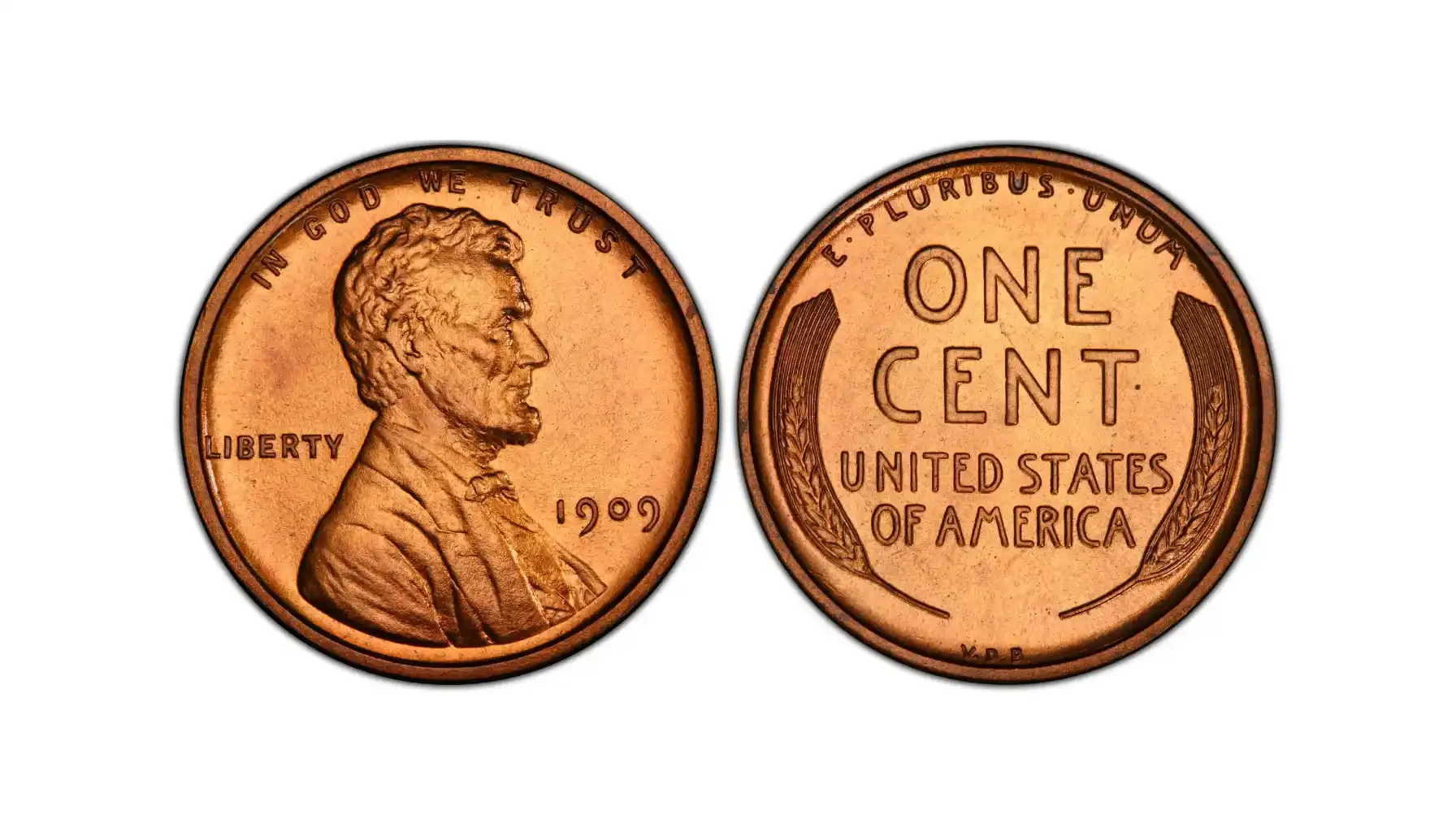
The obverse shows a right‑facing portrait of Lincoln based on Brenner’s earlier plaque; the reverse features two wheat stalks framing the denomination “ONE CENT.” Brenner included his initials “V.D.B.” prominently at the bottom between the wheat stalks. At the time, artists often signed their work on coins; U.S. Mint Chief Engraver Charles Barber had been acknowledged only by a single letter “B” on his designs, so Brenner felt justified in using his initials.
A storm of controversy
The new Lincoln cent was scheduled for release on Lincoln’s actual birthday, 12 February 1909, but the Mint delayed the launch to add the motto “In God We Trust” to the obverse. When the coins finally entered circulation on 2 August 1909, public excitement turned to controversy almost immediately. Within days, critics complained that Brenner’s initials were too prominent and amounted to free advertising. Secretary of the Treasury Franklin MacVeagh, who apparently hadn’t inspected the design closely, responded by ordering the coins withdrawn. Production ceased after only a few days, and the Mint recut the dies to remove the initials, creating two distinct varieties: the 1909 VDB and the 1909 (no VDB).
Two mints produced the Lincoln cent that year: Philadelphia (no mint mark) and San Francisco (mint mark S). Philadelphia struck a massive 27,995,000 VDB cents before the recall, but San Francisco managed just 484,000. Those 484,000 coins—designated 1909‑S VDB—became the rarest regular‑issue Lincoln cents and remain one of the most coveted dates in American numismatics .
Collectors line up: the 1909 VDB frenzy
News that the VDB pennies were being discontinued touched off a frenzy. People in major cities waited in long lines to obtain rolls of the new cents, hoping they would become valuable souvenirs. According to contemporary newspapers, some vendors resold the coins for as much as 25 cents each—a 2,500 percent profit —before the Mint clarified that only the initials were being removed. In New York City, the crowds grew so large that police on horseback were summoned to maintain order.
Diagnostics: spotting a genuine 1909‑S VDB
Because of its rarity and high value, the 1909‑S VDB is one of the most frequently counterfeited U.S. coins. Collectors use several diagnostics to identify authentic specimens:
Mint mark placement
On genuine 1909‑S VDB cents, the S mint mark appears beneath the date and slightly to the left. There are three recognized positions for the mint mark, but all share a distinctive serif shape . Counterfeiters sometimes add an S to a regular 1909 VDB, so the shape and placement must be scrutinized
V.D.B. initials
The initials “V.D.B.” should be sharply struck and centered between the two wheat stalks on the reverse . The crossbar of the B is slanted rather than horizontal, a detail often missed by fakers . Altered coins may display hand‑engraved or uneven letters.
Die markers and surface quality
Authentic 1909‑S VDB cents sometimes exhibit minor die markers—tiny die cracks or metal flow lines—that help experts confirm authenticity. Genuine coins were struck under high pressure and display a lustrous surface with sharp details; cast counterfeits often appear dull and lack defined design elements.
Legacy and value
The 1909 VDB Lincoln cent is more than a curiosity—it marked the beginning of the longest‑running coin design in U.S. history. Lincoln’s portrait has appeared on the cent continuously since 1909, making the 1909 VDB a symbolic starting point for modern U.S. coinage. Its combination of historical significance and scarcity ensures enduring demand. Even low‑grade 1909‑S VDB cents trade for hundreds of dollars, while high‑grade, red‑toned examples fetch thousands (exact values fluctuate with market conditions and grading).
From an educational standpoint, the 1909 VDB story highlights the delicate balance between artistry, politics and public opinion in coin design. Roosevelt’s desire to celebrate Lincoln and invigorate coinage led to one of the most popular U.S. coins. Brenner’s bold signature triggered an early 20th‑century media storm, offering a glimpse into how quickly public sentiment could influence government action. Collectors today appreciate not only the coin’s beauty but also the lessons embedded in its brief production run.