Selling Coins, Jewelry, or Watches: What to Bring to a Buying Event
The single biggest factor in how a buying event goes is preparation. Sellers who walk in organized get faster, cleaner offers. Sellers who walk into a buying event with a tangled bag of jewelry and no idea what’s inside get the same offer in the end — they just wait longer and feel less confident about it.
The good news: preparation takes about twenty minutes the night before. Here’s exactly what to bring, what to leave home, and what to expect when you sit down.
Bring a government-issued photo ID to every buying event
This is non-negotiable. State and federal law requires buyers to verify the identity of anyone selling precious metals. A driver’s license, state ID, or passport all work fine.
Without ID, the buyer legally cannot complete the transaction — regardless of what you brought to sell. If you’re driving someone else (an elderly parent, for example), make sure they have their ID with them.
For coins: bring everything, in original condition
Coin sellers make two mistakes that cost real money:
Mistake #1: Cleaning the coins. This is the single most common value-destroying error. A vintage silver dollar with its original patina is worth significantly more than the same coin polished to a mirror shine. Cleaning removes the original surface and signals to any buyer that the coin has been altered. If you have coins and you’ve been thinking about “shining them up before you go” — please don’t. Bring them exactly as they are.
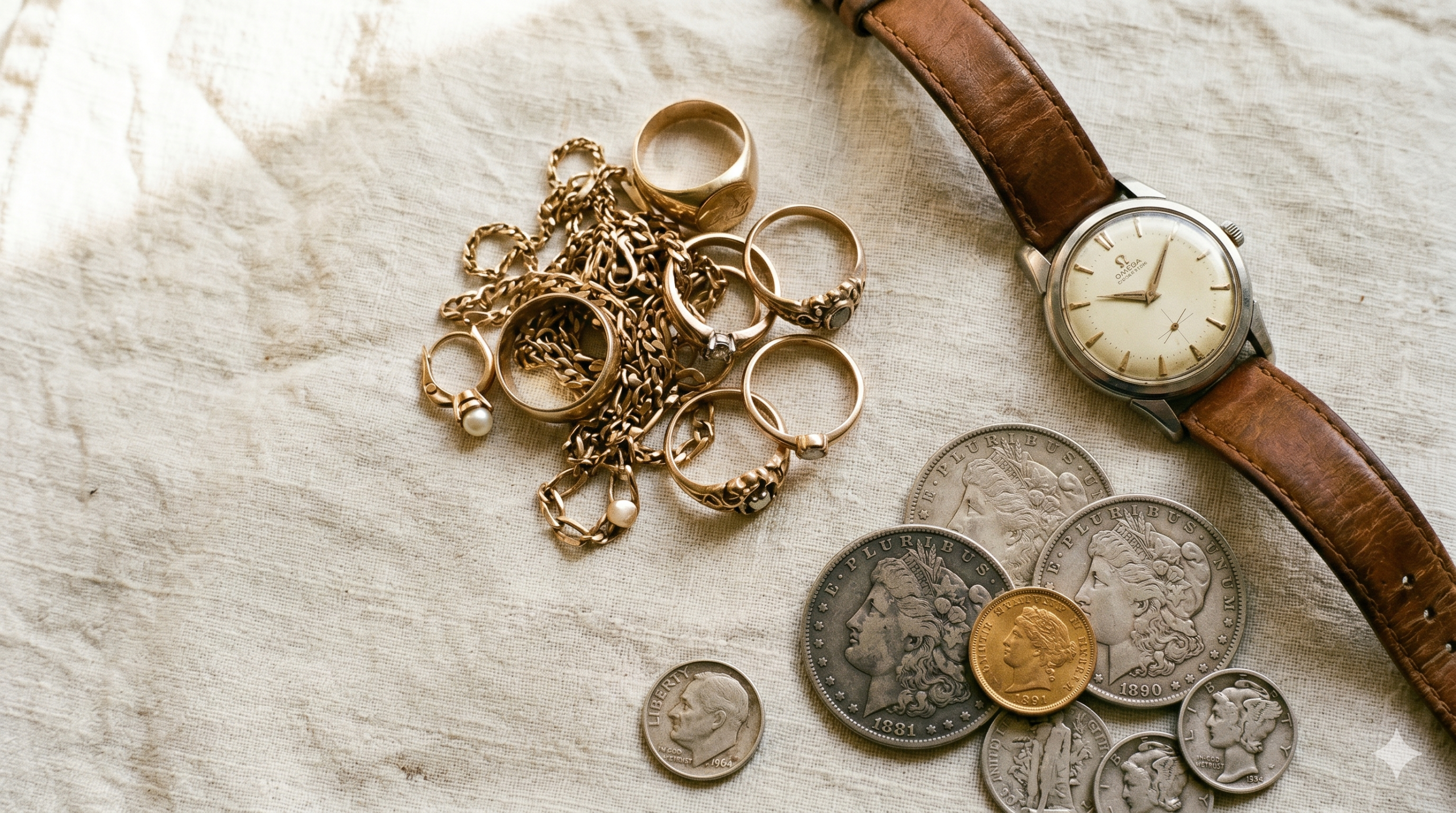
Mistake #2: Cherry-picking what to bring. Bring everything. Common-date Wheat pennies you assumed are worthless might include a key date. The “old foreign coins” your grandfather kept might include silver. A buyer can quickly sort what’s valuable from what’s not, but they can only sort what’s in front of them.
What helps:
- Keep coins in their original holders if they’re in cardboard 2x2s, plastic flips, or graded slabs. Don’t remove them from professional grading holders (PCGS, NGC, ANACS) — the grade is part of the value.
- If coins are loose, a clean small box or zip bag is fine. No need to organize by date.
- If you have paper currency, bring it too. Old large-size notes, silver certificates, and star notes can carry significant premiums.
For jewelry: bring all of it, including the “junk”
Jewelry sellers consistently leave money at home because they pre-judge what’s valuable. A few rules:
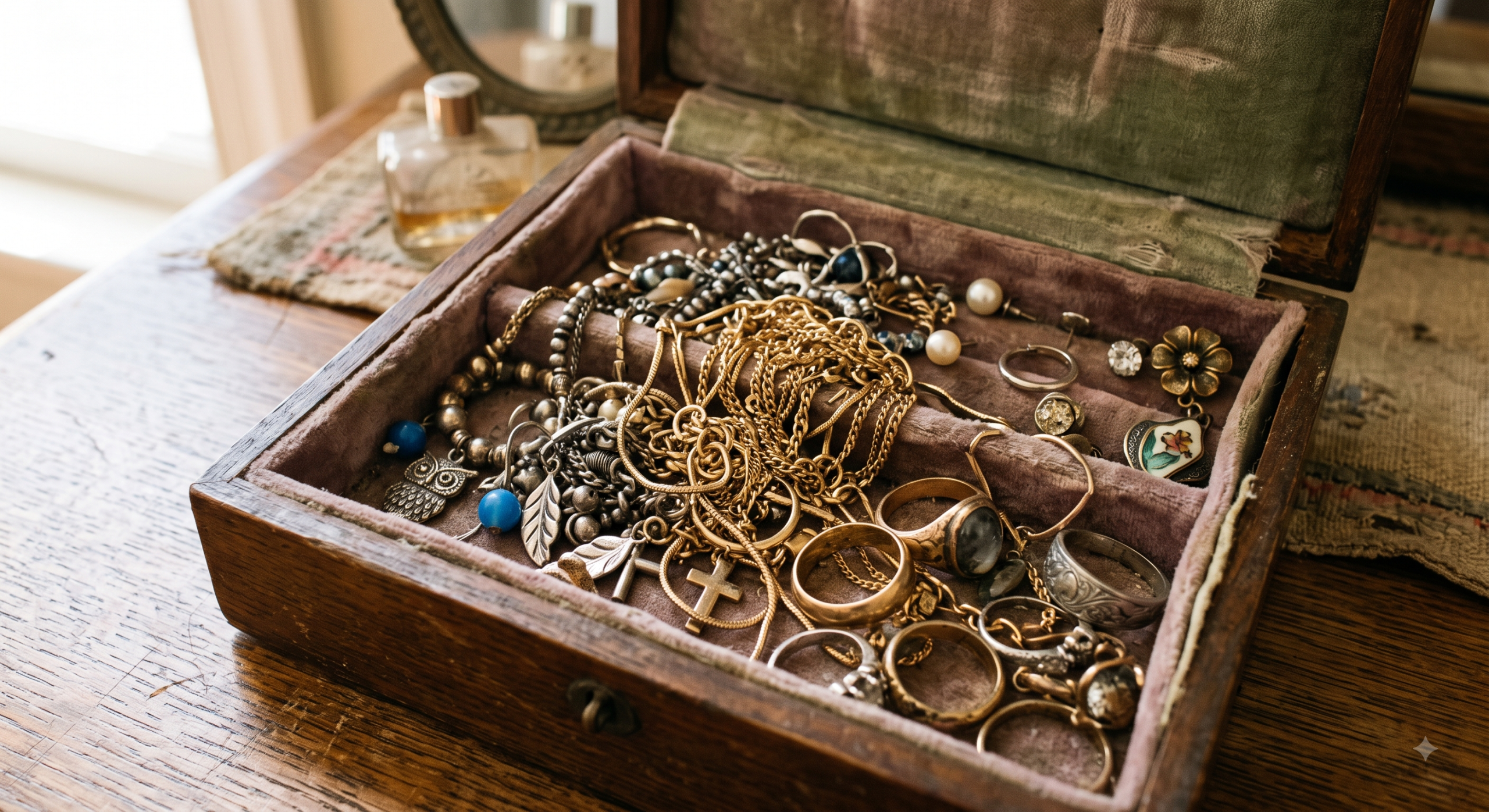
Bring single earrings, broken chains, and bent rings. These are often gold-by-weight, and the buyer’s offer at a buying event is based on the metal content — not whether the piece is wearable. A single 14k earring whose match is long gone is worth real money. Don’t leave it in the drawer.
Bring the pieces you “think might not be real gold.” Most sellers underestimate what’s solid and overestimate what’s plated. A test takes thirty seconds and tells you definitively. The downside of bringing a costume piece is nothing — the buyer hands it back. The downside of leaving a real piece at home is leaving money on the table.
Bring the pieces still in their original boxes. Tiffany, Cartier, David Yurman, John Hardy, and similar named pieces often carry brand premiums above their metal weight — but only if the buyer can confirm authenticity, which is easier with original boxes, papers, or hallmark stamps intact.
Sort by metal type if you can. A simple system: gold in one zip bag, silver in another, costume in a third (so the buyer can quickly set it aside). This isn’t required — buyers will sort for you — but it speeds the appointment.
For sterling silver: weigh and separate ahead of time
Silver is paid by weight at a percentage of spot, so the most important thing is knowing what you actually have:
- Sterling flatware (.925 silver) is the most common. Look for “Sterling” or “925” stamps on the back of each piece. Bring everything stamped.
- Silverplate (no .925 mark, often marked “EP,” “EPNS,” or with a brand like Rogers) has effectively no scrap value. You can bring it to confirm, but expect a zero offer.
- Sterling holloware (bowls, candlesticks, tea sets) often has weighted bases — the buyer will deduct the weight of the filler. This is normal and expected; not a tactic.
If you have a kitchen scale, weigh sterling pieces in grams before you go. Spot price × .925 purity × buyer’s payout percentage gives you a rough check on the offer.
For watches: bring papers and boxes if you have them
Watches are the most variable category — value can range from $50 to five figures depending on brand, model, and condition. A few principles:
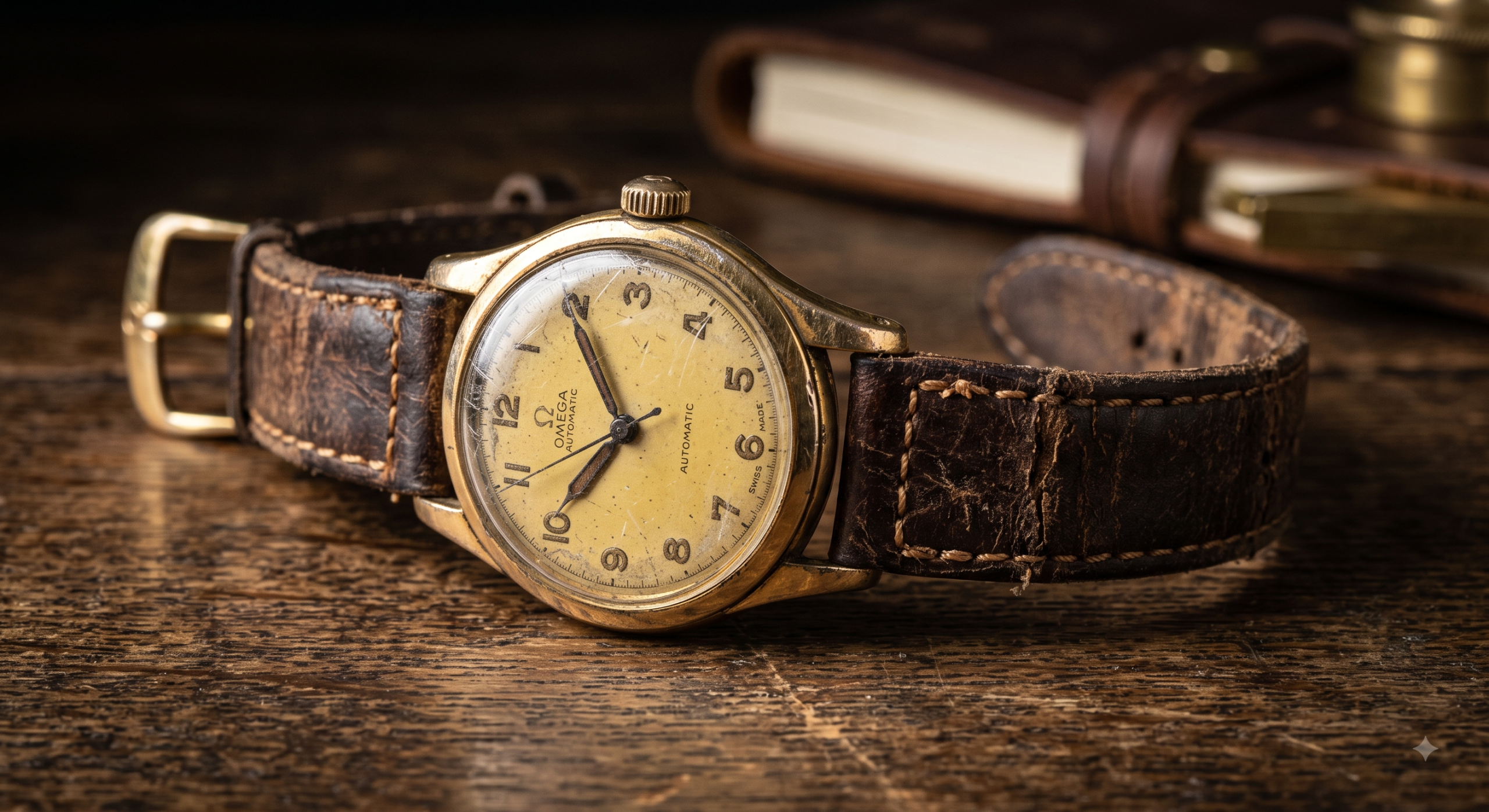
Bring it even if it doesn’t run. Mechanical watches that have stopped are often worth more than people assume, especially Rolex, Omega, Tudor, Cartier, IWC, Patek Philippe, Heuer, Longines, and Movado.
Bring the box and papers if you have them. Original purchase receipts, warranty cards, service records, and the original box can add meaningful value, especially on luxury brands. A Rolex with full set (watch, box, papers, booklets) is worth significantly more than the same watch loose.
Don’t service it before selling. A recent service from an unauthorized watchmaker can actually hurt value — replacement parts that aren’t original to the manufacturer can disqualify the watch from a premium offer. Leave it as you found it.
Pocket watches count. Hamilton, Elgin, Waltham, Illinois, and Howard pocket watches in gold cases can carry meaningful premiums. Even silver and gold-filled pocket watches are worth bringing in.
Other items worth bringing
A buying event isn’t only about gold, silver, coins, and watches. Most reputable buyers also evaluate:
- Diamonds and loose gemstones, especially anything 0.25 carat or larger
- Class rings, dental gold, and gold scrap
- Sterling silver jewelry (chains, charms, brooches)
- Vintage costume jewelry from named houses (Trifari, Coro, Miriam Haskell, Schreiner)
- Currency and old paper money
- Military medals and items (varies by buyer)
Worth a quick check — ask the buyer’s published list of what they purchase before you go, so you’re not hauling things they won’t evaluate.
What to leave at home before a buying event
A short list of things that waste your time at the table:
- Cleaned or polished coins (already discussed)
- Items you’re not actually willing to sell. Sentimental pieces you “just want appraised” are often better evaluated at a dedicated appraisal appointment, not a buying event.
- Items missing the gold/silver content entirely — costume jewelry with no metal value, gold-plated giftware, gold-tone watches that aren’t actually gold
What to expect at the buying event
A typical buying event appointment runs 15–45 minutes depending on how much you bring. The flow at most buying events:
- You check in and present ID
- The buyer sorts what you brought by type
- Each item gets tested (karat or silver purity) and weighed
- The buyer calculates and presents an offer, item by item or in groups
- You decide what to sell and what to take home — you’re not obligated to sell anything
- If you accept, the buyer writes a business check on the spot
You can ask questions at every step. Reputable buyers will explain what they’re seeing, what they’re testing, and how they arrived at each number. If anything feels rushed or unclear, slow it down.
A note on buying event offers
Buying-event offers reflect wholesale value — what the buyer can pay you today, in cash equivalent, knowing they need to refine, resell, or move the items afterward. They will be lower than retail jewelry-store replacement values and lower than auction estimates. That’s not a tactic; that’s how the wholesale market works.
What matters is whether the offer is fair for what it is — a same-day, no-fee, no-listing, no-waiting offer with payment immediately. For most sellers, that convenience is worth the trade-off vs. weeks of consignment or eBay listings.
Coming to a Premier buying event
Premier Gold, Silver & Coin holds buying events at hotels across the Midwest and Mid-Atlantic each week. Bring everything from the lists above, bring your ID, and we’ll walk through it with you item by item. No appointment necessary at any Premier buying event, no obligation to sell, and every transaction paid by business check the same day. Sign up for local event notifications to know when we’re coming to your area.